Every engagement begins with understanding the situation. These four practices guide our work; the sequence and activities depend on the service selected.
01
Assess
We clarify the concerns, hear relevant perspectives, and consider readiness, power dynamics, and organizational context. Together, we define the purpose and scope of the work.
02
Facilitate
We select and guide a process suited to the situation. This may involve mediation, individual coaching, group dialogue, or a combination of services.
03
Resolve
We help participants identify workable agreements, decisions, and next steps. Where differences remain, we clarify them and identify what is needed to move forward.
04
Strengthen
We support follow-through through agreed actions, leadership commitments, skill development, and review points tailored to the engagement.
Understanding Conflict Interventions
Conflict Prevention
Conflict prevention builds the skills, relationships, and organizational practices that help your people address concerns before they escalate. Clear expectations, respectful communication, cultural awareness, and psychologically safe spaces encourage employees to speak up, ask questions, and raise concerns without fear of embarrassment or retaliation. This approach reduces avoidable misunderstandings and harm while supporting healthy disagreement and constructive responses to differences.
Conflict Management
Conflict management helps people navigate ongoing disagreement while maintaining respectful relationships and productive work. It is especially important when differences cannot be resolved immediately or when people must continue working together. Through clear boundaries, communication agreements, coaching, and coordinated responses, conflict management limits disruption and creates conditions for progress.
Conflict Resolution
Conflict resolution addresses the specific issues driving a dispute and helps those involved develop an acceptable path forward. Mediation, negotiation, and facilitated dialogue help participants clarify concerns, explore interests, and establish practical agreements. Resolution provides direction for moving forward, even when participants continue to hold different perspectives.
Conflict Transformation
Conflict transformation recognizes conflict as a natural part of organizational life and a catalyst for constructive change. It helps your organization channel the energy of disagreement into reflection, creativity, and innovation. By exploring personal experiences, working relationships, organizational structures, and cultural norms, your team can challenge assumptions, address underlying inequities, and develop new approaches. The goal is to build stronger relationships, fairer systems, and a greater capacity to learn and grow through conflict.
The Ellison Model™ and Conflict as a Unitary Process
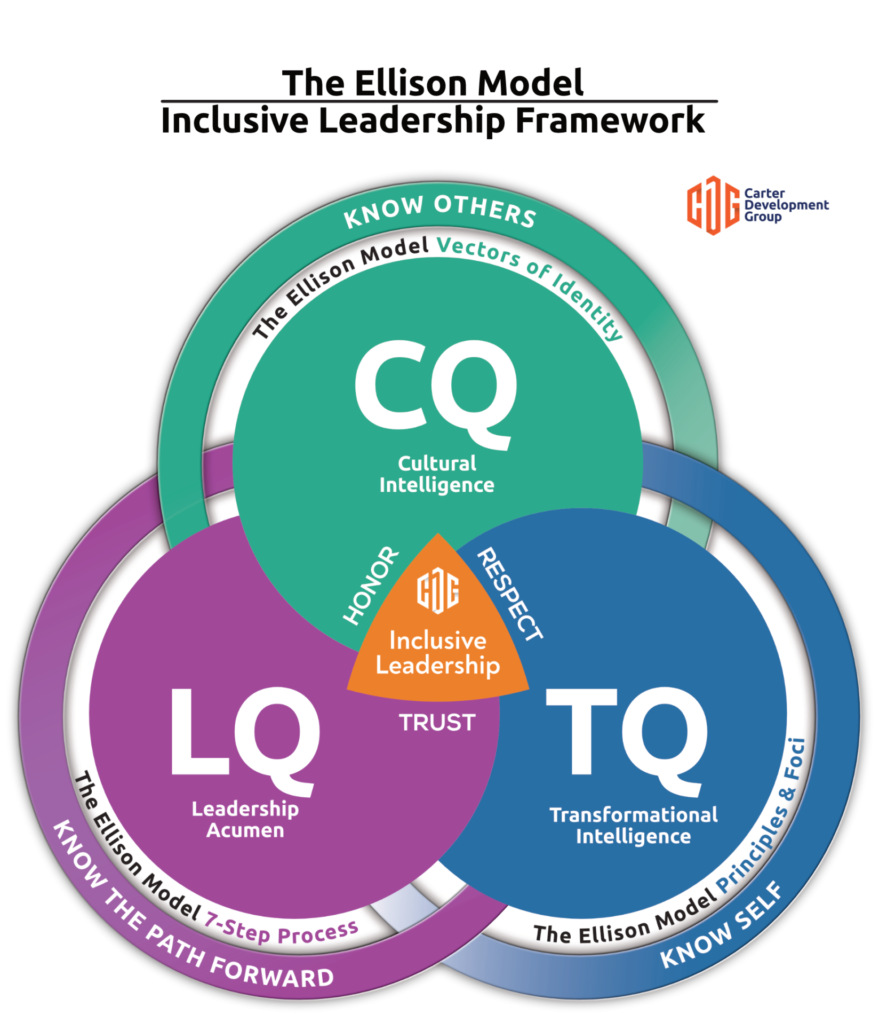
The Ellison Model™ approaches conflict resolution as a unitary process that begins with self-reflection and personal accountability. We help your leaders and employees examine how their assumptions, attitudes, and behaviors influence conflict—and identify what they can change. Grounded in care, sharing, love, trust, honor, and respect, this approach connects individual growth with stronger relationships and organizational improvement. Each person’s commitment to constructive action supports your organization’s capacity to prevent, manage, resolve, and transform conflict.
CDG designed and delivered a three-day leadership, cultural sensitivity, and conflict resolution program for 75 managers and executives at Grace Bay Resorts. The program used role-play, reflective activities, and facilitated dialogue to practice communication and conflict management skills.